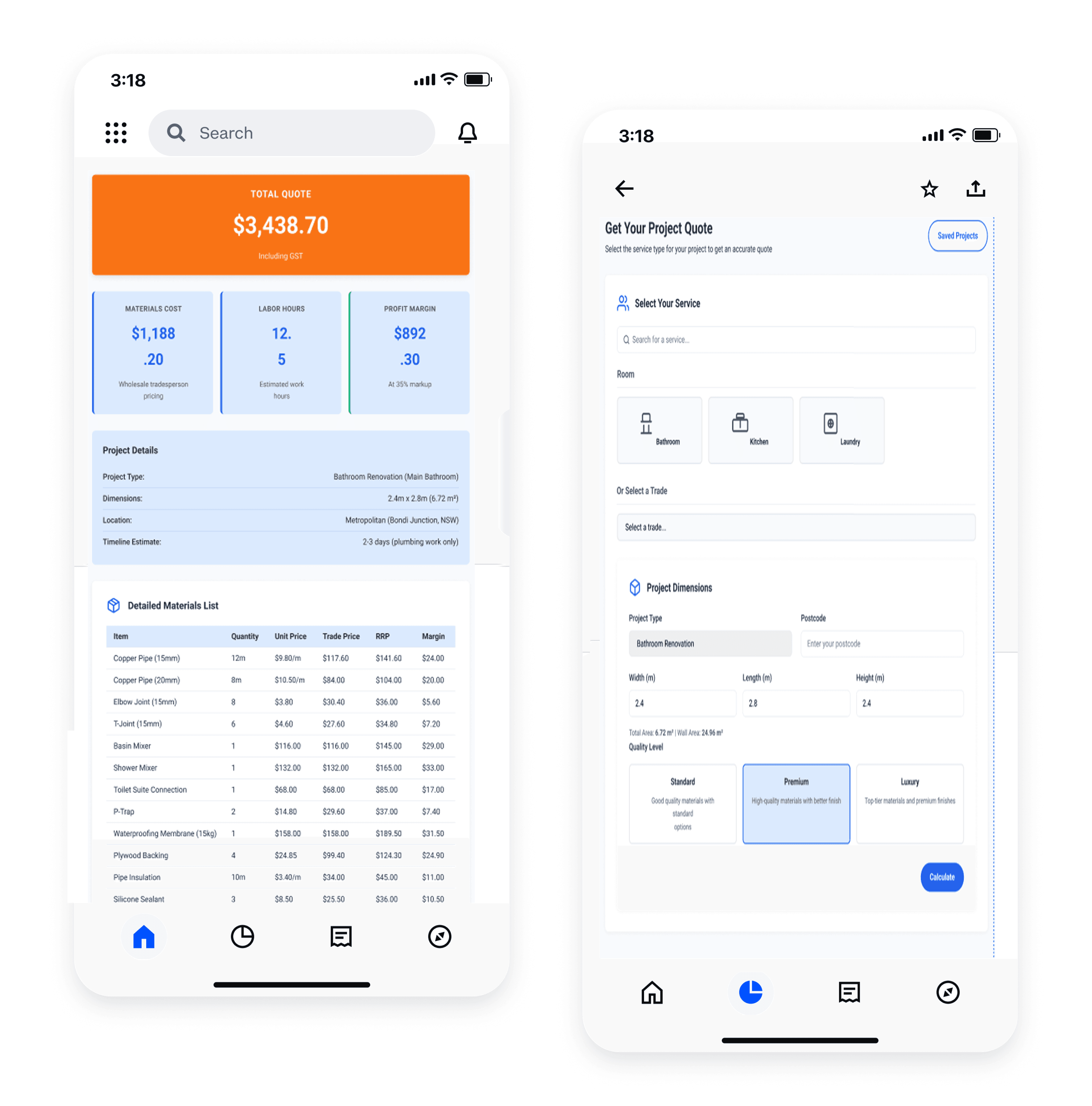
Cost Breakdown Best Practices for Interior Designers
Interior designers face unique challenges when it comes to cost breakdowns. Unlike traditional construction projects, interior design work involves a complex mix of materials, furnishings, labor, and creative services that can be difficult to quantify and estimate accurately.
Understanding the Design Cost Structure
A comprehensive interior design cost breakdown should include:
- Design Services: Concept development, space planning, and project management
- Materials: Paint, wallpaper, flooring, and decorative elements
- Furnishings: Furniture, lighting, and accessories
- Labor: Installation, painting, and finishing work
- Overhead: Administrative costs and profit margins
Creating Transparent Client Proposals
Transparency in cost breakdowns builds trust with clients and reduces the likelihood of scope creep. Your proposals should clearly separate:
- Fixed costs vs. variable costs
- Client-provided items vs. designer-sourced items
- Labor costs by trade or specialty
- Contingency allowances for unexpected changes
Managing Client Expectations
Effective cost breakdowns help manage client expectations by:
- Providing clear itemized costs for each design element
- Explaining the value proposition of premium materials
- Setting realistic timelines for different project phases
- Including options for different budget levels
Leveraging Technology for Accuracy
Modern cost breakdown tools can help designers:
- Access real-time pricing for materials and furnishings
- Calculate labor costs based on local rates
- Generate professional proposals quickly
- Track project costs throughout the design process
By implementing these cost breakdown best practices, interior designers can improve their project profitability, enhance client satisfaction, and build a reputation for transparency and reliability in the industry.