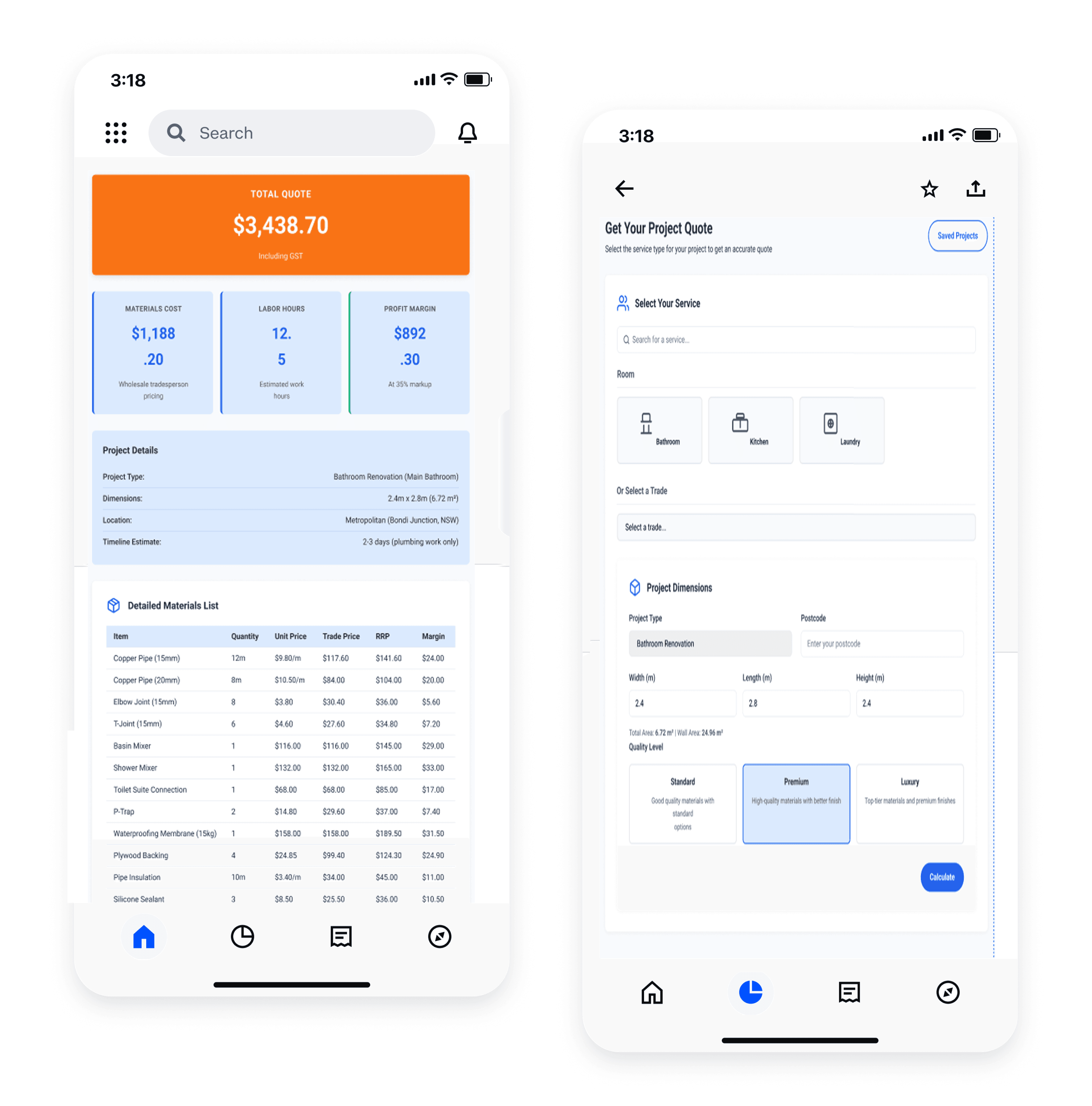
Essential Cost Estimation Guide for Trade Professionals
For trade professionals, accurate cost estimation is the foundation of successful project bidding and profitable business operations. Whether you're a plumber, electrician, carpenter, or general contractor, understanding how to break down project costs is essential for winning work and maintaining healthy profit margins.
The Three Pillars of Cost Estimation
Every trade project cost breakdown should address these three fundamental areas:
1. Material Costs
Accurate material costing requires:
- Current supplier pricing and bulk discounts
- Waste factor calculations (typically 10-15%)
- Quality level considerations and alternatives
- Delivery and handling costs
2. Labor Costs
Labor pricing should include:
- Hourly rates for different skill levels
- Project complexity multipliers
- Travel time and site access considerations
- Overtime and weekend work premiums
3. Overhead and Profit
Don't forget to include:
- Insurance and licensing costs
- Tool and equipment depreciation
- Administrative and marketing expenses
- Profit margin (typically 15-25%)
Advanced Estimation Techniques
Experienced trade professionals use these advanced techniques:
- Unit Pricing: Calculate costs per square foot, linear foot, or piece
- Assembly Pricing: Group related materials and labor into assemblies
- Parametric Estimating: Use project parameters to scale costs
- Risk Analysis: Include contingency allowances for unknowns
Technology Integration
Modern cost estimation tools can help trade professionals:
- Access real-time material pricing databases
- Generate professional proposals quickly
- Track project costs in real-time
- Integrate with accounting and project management systems
Building Client Trust
Transparent cost breakdowns build client confidence by:
- Clearly explaining what's included in your price
- Providing options for different quality levels
- Identifying potential cost-saving opportunities
- Setting realistic expectations for project outcomes
By mastering these cost estimation fundamentals, trade professionals can improve their bidding accuracy, increase project profitability, and build stronger relationships with clients based on transparency and reliability.